
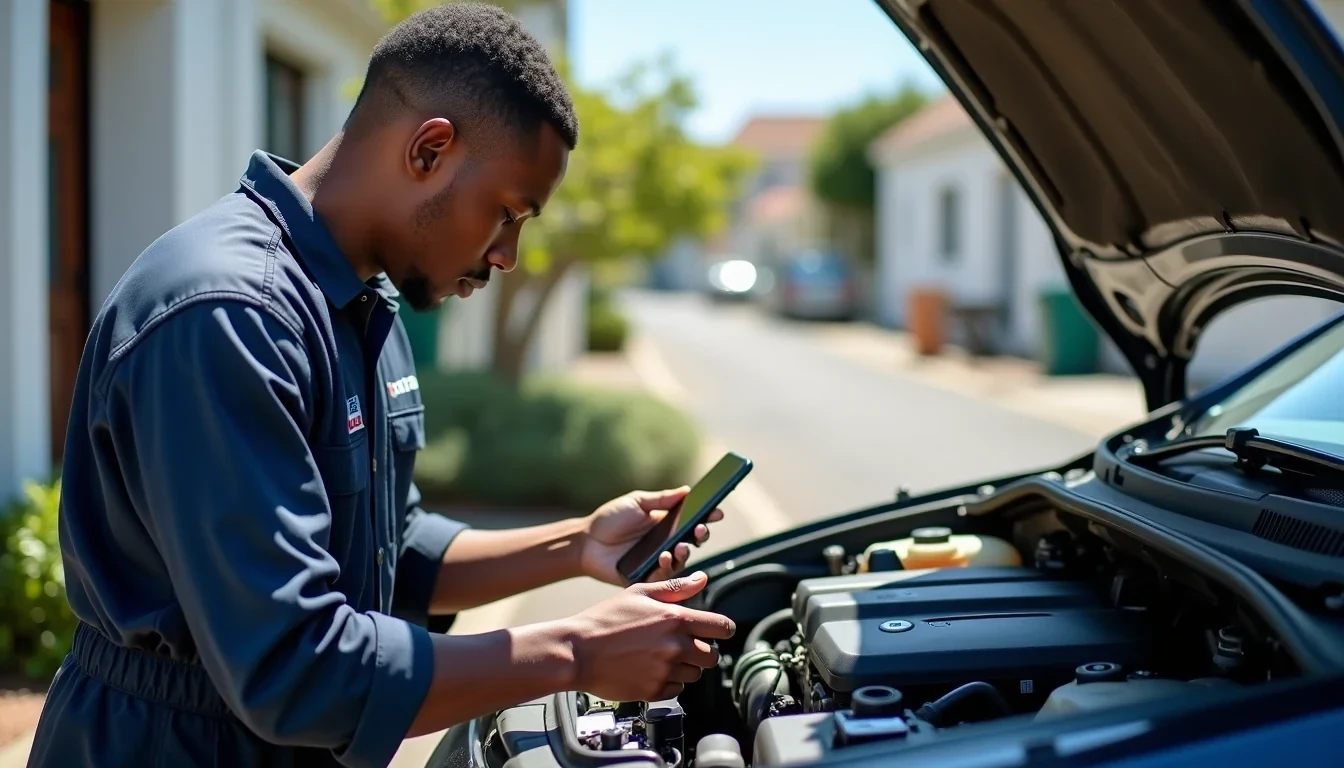
Booking a car service used to mean clearing your morning, fighting through Cape Town traffic to a workshop in Ottery or Paarden Eiland, then either waiting in a grimy reception or forking out for an Uber back home. The whole ritual could burn four hours before anyone touched your engine. Now a growing number of drivers in the Southern Suburbs are skipping this entirely, handling oil changes, brake pads, and diagnostic checks from their phones while their cars sit in driveways or office parking bays.
The shift is straightforward enough to describe, but harder to execute well. Mobile mechanics have existed for years; you find them through WhatsApp groups or a cousin’s recommendation, often with vague pricing and no guarantee of when they will arrive. Digital infrastructure now wraps around the service. Platforms like iCar Mobile Mechanics let you select your vehicle, pick a service, see a fixed quote, and lock in a time slot, all before a spanner turns. The mechanic comes to you, whether that is a home in Newlands or a workplace in Wynberg, and the transaction completes without you ever visiting a workshop.
How Mobile-First Booking Actually Works
The user flow is designed for thumbs, not desktops. You open a mobile-optimised site, enter your make, model, and year, then tick through a menu of services from minor services to auto electrical work. The system returns a quote immediately, parts and labour itemised, with no hidden line items to discover later. Calendar integration shows real-time availability, so you are not playing phone tag or waiting for a callback that never comes.
Payment sits inside the same flow. Card, EFT, or mobile payment options like SnapScan settle the bill before or after the work, depending on the platform. Confirmations and reminders arrive by SMS or WhatsApp, the channels South Africans actually check. Some systems even let you track the mechanic’s approach, much like you would a Bolt driver, though this remains less common than in food delivery.
For a mobile-first audience accustomed to managing banking, groceries, and government services through a single device, this feels obvious. The friction was never the mechanical work itself; it was the coordination, the uncertainty, the dead time.
What You Gain and What You Lose
The practical benefits stack quickly. Time is the largest: no round trip through the N2 or M3 during peak hours, no half-day swallowed by logistics. Location flexibility means the service happens while you are in a meeting or making lunch for your children. Security improves too, your vehicle stays in a familiar driveway or secure office park rather than an unfamiliar industrial yard.
Cost transparency is another genuine draw. Traditional garages have a reputation for discovering additional problems once they have your car and your anxiety. Fixed upfront quotes, backed by a digital record of what you agreed to, remove some of that dynamic. You know the price before you commit.
There are trade-offs, and honest writing about mobile services should name them. Complex repairs requiring a lift or specialised equipment still need a workshop. A mobile mechanic can handle routine maintenance, diagnostics, and many electrical faults, but not everything. Weather matters in Cape Town; a torrential Atlantic winter day makes driveway work unpleasant or impractical. The model depends on density. The economics work in Rondebosch, Claremont, and the broader Southern Suburbs, where qualified mechanics can string together several jobs in a tight radius without burning fuel and hours between calls.
The Local Angle
Cape Town’s geography and traffic patterns make this model particularly suited to certain areas. The Southern Suburbs, with their concentration of professionals, older housing stock with usable driveways, and chronic congestion on arterial routes, are obvious targets. Residents who might once have tolerated a Saturday morning workshop run now expect to handle car care between meetings.
For drivers in these neighbourhoods, options are expanding. You can book auto mechanics In Rondebosch without leaving your home, or arrange Mobile Mechanics In Claremont to meet you at your office. The broader Southern Suburbs of Cape Town are increasingly covered by services that treat the area as a single logical market rather than a collection of disconnected suburbs.
South African service businesses have historically been terrible at geographic precision. A “Cape Town” offering often means somewhere within a forty-kilometre radius, with vague promises and variable response times. Mobile mechanic platforms that segment by actual suburb, with clear coverage maps and realistic arrival windows, are solving a coordination problem that pure geography created.
The Bigger Pattern
Car maintenance is not an obvious candidate for digital disruption. It is physical, greasy, and resistant to the clean abstractions that software prefers. Yet it is following the same trajectory as grocery delivery, telemedicine, and mobile banking: the phone becomes the coordination layer, stripping out the administrative friction while the actual work remains stubbornly analog.
The trend is less about mechanics becoming digital natives and more about the booking, payment, and communication infrastructure finally catching up to how South Africans already live. WhatsApp is the country’s default operating system for informal commerce. Prepaid data bundles shape when and how people go online. Trust is built through transparency and peer review, not brand heritage. Mobile mechanic services that align with these habits, rather than imposing Silicon Valley conventions, are the ones gaining traction.
For now, the market remains fragmented. Some operators run on polished platforms with proper insurance and verified reviews. Others are essentially freelancers with a website and a prayer. The consumer’s job is to distinguish between them, checking for upfront quotes, clear service descriptions, and digital records of past work. The tools for this exist. Whether drivers use them, or fall back on habit and hope, will determine how quickly the old workshop model erodes outside of complex repairs.
The phone in your pocket has already changed how you bank, shop, and move around the city. Managing your car’s health through the same device is a smaller step than it first appears, and for many Cape Town drivers, it is already the default.